
Solar Inverter Price in Pakistan 2026: Types, Costs & How to Choose
The inverter is the brain of any solar system, yet it is the component most buyers understand the least. If you are researching the solar inverter price in Pakistan for 2026, you have probably noticed prices swing wildly from one shop to the next. This guide explains why, breaks down the real cost by type, and shows you how to pick an inverter that will not become the weak link in your setup.
Get the inverter right and your panels deliver their full potential for over a decade. Get it wrong and you face brownouts, dead batteries, and premature failures. Here is everything you need to know before you buy.
What Does a Solar Inverter Actually Do?
Solar panels produce direct current (DC), but your home appliances run on alternating current (AC). The inverter performs that conversion. Beyond that basic job, modern inverters also manage battery charging, sync with the grid for net metering, and optimize how much power each panel string delivers using Maximum Power Point Tracking (MPPT).
Because it works nonstop in Pakistan’s heat, an inverter’s build quality directly affects the lifespan of your entire investment. That is why price differences here are rarely about branding alone; they reflect real differences in components and cooling design.
Types of Solar Inverters and Their Prices
Three main inverter categories dominate the Pakistani market in 2026. Each serves a different use case, and the price reflects the features you get.
- On-grid (string) inverters: Cheapest option, feed excess power to the grid, but shut off during outages.
- Hybrid inverters: Handle both grid and battery, keep running during load-shedding, the most popular choice in 2026.
- Off-grid inverters: Built for fully independent systems with battery banks, no grid connection required.
Solar Inverter Price Comparison Table
The table below gives realistic 2026 price bands so you can budget accurately before you visit a store or browse an online catalog.
| Inverter Type | Typical Size | Approx. Price (PKR) | Best For |
|---|---|---|---|
| On-grid String | 5 kW | 150,000 – 250,000 | Net-metering, no backup needed |
| Hybrid | 5 kW | 250,000 – 450,000 | Homes with load-shedding |
| Off-grid | 5 kW | 200,000 – 380,000 | Remote or grid-free sites |
Prices vary with brand reputation, surge capacity, and warranty length. When comparing a solar inverter price in Pakistan, always confirm the quoted figure includes the correct MPPT count and a valid manufacturer warranty.
Key Specs That Justify a Higher Price
A pricier inverter is not automatically better, but certain specifications genuinely earn their premium. Focus on these before you decide.
- Efficiency rating: Look for 97 percent or higher; every lost percent is wasted solar generation.
- Surge capacity: Motors and pumps draw huge startup currents; a strong surge rating prevents trips.
- MPPT trackers: Dual MPPT lets you run panels on two roof orientations without losing output.
- Cooling: Quality heat sinks and fans extend life in Pakistani summers.
- Warranty: Five to ten years signals the maker’s confidence in the product.
Practical Tip: Size for Startup, Not Just Running Watts
Here is an insight that saves buyers real money. Many people size their inverter to their running load and forget that motors, refrigerators, and water pumps draw two to three times their rated power at startup. An inverter sized only for running watts will trip every time the AC compressor kicks in. Always add a 25 to 30 percent surge margin so your system handles those spikes smoothly.
Why Professional Installation Protects Your Investment
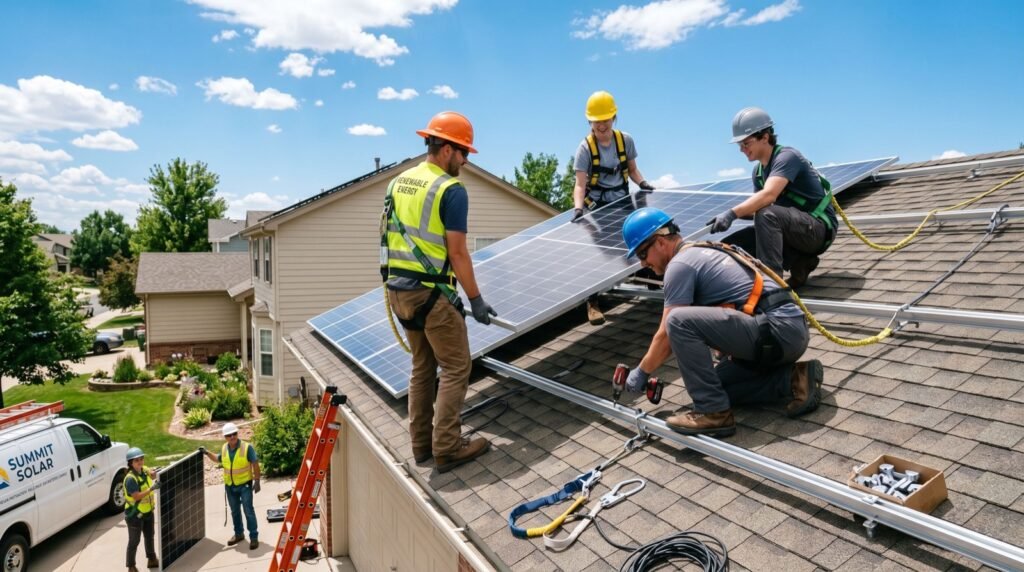
Even the best inverter fails early if it is wired poorly or mounted in a hot, unventilated spot. Correct DC string voltage, proper earthing, and adequate airflow are non-negotiable. According to the U.S. Department of Energy Solar Energy Technologies Office, installation quality is one of the leading factors in long-term solar system reliability.
This is why booking solar installation in Lahore from a certified team pays off. Professionals size the inverter to your true load, configure the MPPT correctly, and set up net metering so you actually earn credit for surplus power.
When selecting an installer, always lean on trusted professionals who provide documented commissioning reports and after-sales support rather than a quick, undocumented job.
On-Grid vs Hybrid: Which Should You Buy?
This is the decision that trips up most buyers, and it comes down to one question: do you need power during outages? The answer determines which inverter delivers the best value for your situation.
An on-grid inverter is the cheaper, simpler choice. It maximizes net-metering savings and has fewer components to fail, but it legally shuts down during a grid outage for lineworker safety, leaving you dark during load-shedding. A hybrid inverter costs more upfront yet keeps critical loads running from batteries when the grid drops, while still exporting surplus power when the grid is healthy.
For most Pakistani homes in 2026, the hybrid inverter wins because load-shedding remains common. If your area has a stable grid and you only want lower bills, the on-grid unit saves money you would otherwise spend on batteries.
- Choose on-grid if your grid is stable and bill reduction is the only goal.
- Choose hybrid if you face regular outages and want backup power.
- Choose off-grid only for remote sites with no grid connection at all.
Common Inverter Buying Mistakes to Avoid
Even careful shoppers fall into a few predictable traps. Knowing them in advance keeps your budget and your system safe.
- Buying too small: An undersized inverter caps your future expansion and trips under load.
- Ignoring MPPT count: A single MPPT limits you to one roof orientation and one string length.
- Skipping surge headroom: Motors and pumps stall an inverter with no surge margin.
- Chasing the lowest price: Cheap inverters often use inferior capacitors that fail early in heat.
- Poor ventilation: Mounting in a hot, closed space shortens inverter life dramatically.
Frequently Asked Questions
How much does a solar inverter cost in Pakistan in 2026?
A quality 5 kW inverter ranges from PKR 150,000 for a basic on-grid unit to PKR 450,000 for a premium hybrid model with battery support and dual MPPT.
Which inverter is best for load-shedding?
A hybrid inverter is best because it seamlessly switches to battery power during outages, keeping essential appliances running without interruption.
Can I run air conditioners on a solar inverter?
Yes, provided the inverter has enough surge capacity. Choose a model rated at least 25 percent above your total running load to handle compressor startup spikes.
How long do solar inverters last?
Quality inverters last 10 to 15 years. Batteries and inverters are typically the first components to need replacement, long before the panels.
Final Thoughts
Understanding the solar inverter price in Pakistan means looking past the sticker and evaluating efficiency, surge capacity, MPPT, and warranty. Budget for a hybrid unit if load-shedding affects you, size it for startup loads, and insist on professional installation. Do that, and your inverter will quietly power your home through the hottest summers for years to come. Ready to invest wisely? Compare certified inverters and book an expert installation today.